.png)




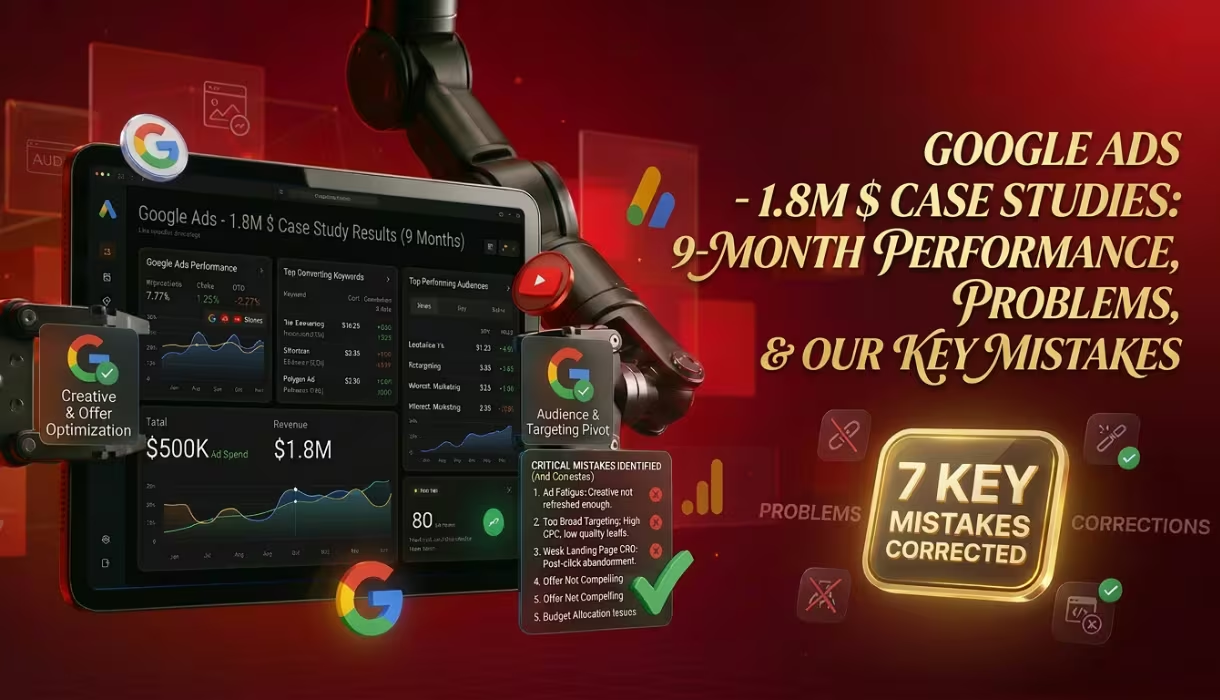

Key Takeaways
- High-intent keyword clusters and message match drive faster lead volume.
- Search campaigns perform best when offers are specific, local, and time-bound.
- Negative keyword discipline reduces wasted spend and protects CPL.
- Fast, intent-matched landing pages improve Quality Score and conversion rate.
- Weekly search term and bid optimization compounds lead growth.
Google Ads works best when intent, keywords, and offer messaging are tightly aligned In this guide, we break the topic into practical actions that teams can apply without changing their workflow overnight. The focus is simple: better planning, faster execution, and stronger outcomes from each campaign cycle.
Most teams lose performance because strategy, creatives, and landing-page intent are handled in separate silos. Once those parts are disconnected, reporting becomes noisy and decision-making slows down. A stronger approach aligns audience intent, message hierarchy, and offer clarity from day one. Start by defining one primary conversion action, one supporting action, and one clear measurement model. This creates a stable system where experiments are meaningful and results are comparable across weeks.
Google Ads Framework for Scalable Results
Use a repeatable framework with four layers: research, build, test, and optimize. In the research phase, map objections, motivations, and competitor angles. In the build phase, create assets that answer user questions quickly and visually. In testing, run controlled experiments with one major variable at a time so you can identify real winners. During optimization, shift budget and effort toward proven segments while documenting why each decision was made. This process keeps performance stable even when market conditions shift.
What to Prioritize First
- Group keywords by intent, not by broad topic.
- Keep ad copy tightly matched to each ad group query set.
- Use negative keywords weekly to reduce irrelevant clicks.
- Improve Quality Score with faster, intent-matched landing pages.
Execution quality matters more than hacks. Teams that ship clear offers, relevant creative angles, and measurable follow-up steps outperform teams chasing short-term tricks. Keep your structure clean, your naming consistent, and your creative learning loop active. When every test teaches something useful, growth becomes predictable rather than accidental. That is the real advantage: a system that helps you improve continuously while reducing wasted spend, missed opportunities, and operational friction.


.avif)
.avif)
.avif)
.avif)
.avif)
.avif)
.avif)
.avif)
.avif)











-p-130x130q80.avif)
-p-130x130q80.avif)